

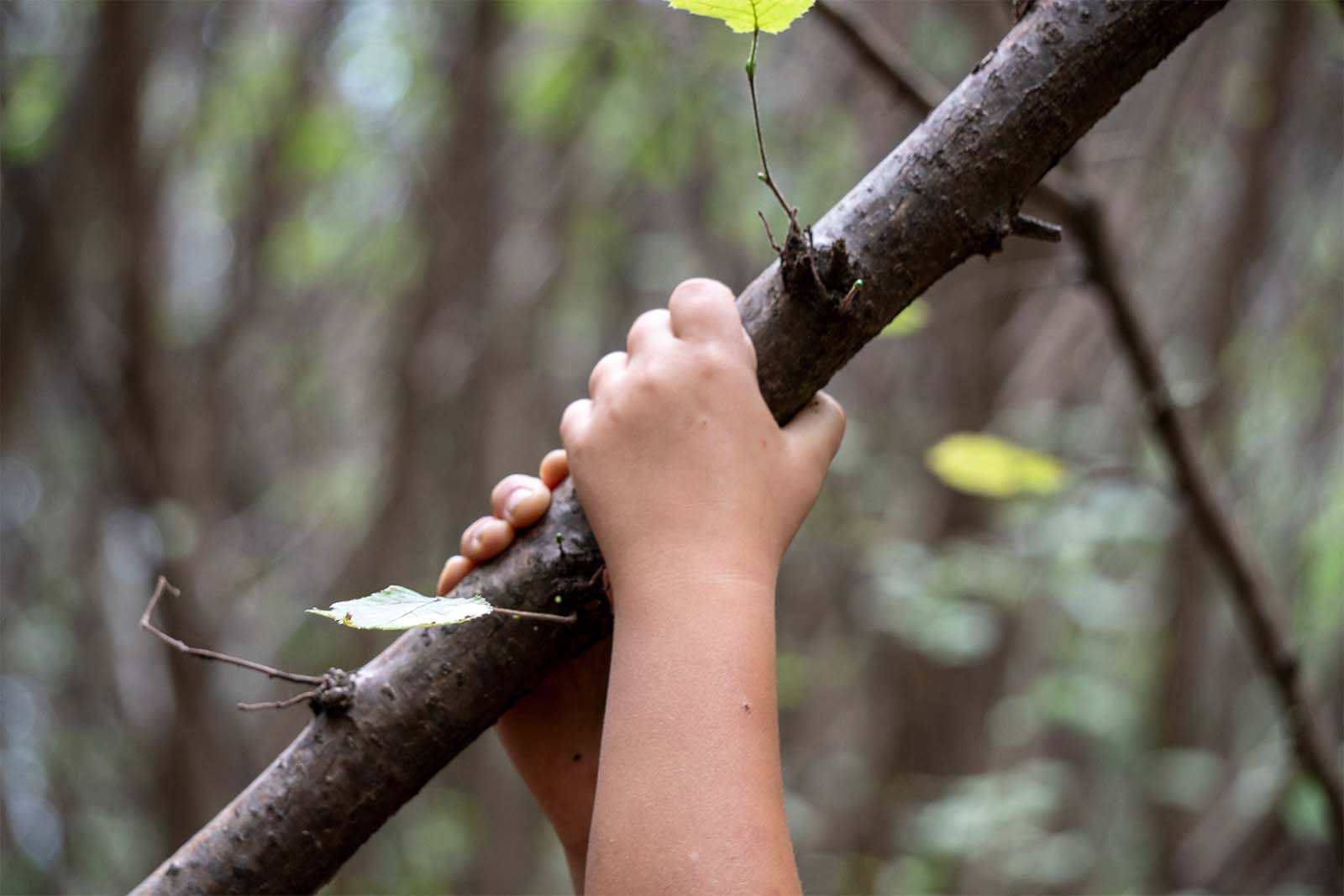
Uriel Orlow, Forest Futurism, 2024
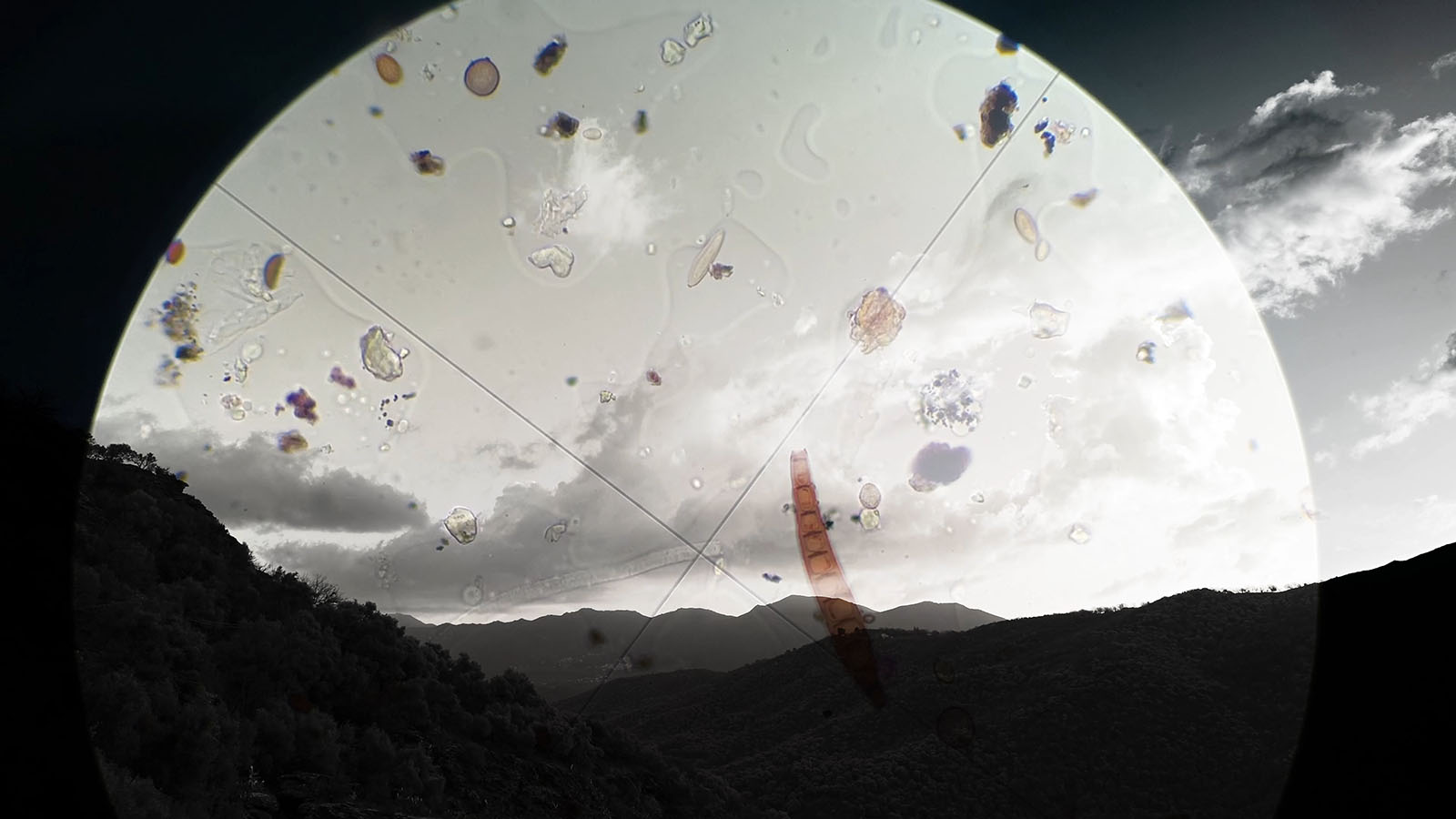
Maëlle Cornut, 2026
Translocal Climate Narratives: Aesthetic Strategies Beyond Solutions and Despair
Uriel Orlow, Denise Bertschi, Francesca Brusa, Maëlle Cornut, Laurence Favre
SNSF research project
2026 – 2030
Institute Art Gender Nature HGK Basel FHNW
Translocal Climate Narratives: Aesthetic Strategies Beyond Solutions and Despair is an SNSF artistic research project by Uriel Orlow, Denise Bertschi, Francesca Brusa, Maëlle Cornut, and Laurence Favre exploring the climate crisis’s uneven impacts and interconnections through artistic field studies, developing narratives of resilience beyond technological solutionism and apocalyptic despair.
Climate Literacies and Forms of Repair
Symposium Panel
As part of Translocal Climate Narratives
Contributions by Julie Jebeile, Colin Courtney-Mustaphi, Alice Hertzog
11 November 2026, 2 – 3.30 pm
Studio Cinema D 0.01, Tower Building, HGK Basel FHNW
Also part of the information event for prospective students, 11 November 2026, from noon, HGK Basel FHNW
The symposium panel is open to the public.
The climate crisis is profoundly translocal, shaped by unequal histories of responsibility and experiences across interconnected human and more-than-human worlds. Public discourse often oscillates between technological solutionism and apocalyptic despair. The SNSF research project Translocal Climate Narratives: Aesthetic Strategies Beyond Solution and Despair moves from questions that interrogate how climate literacies can tend to the complexity and unevenness of the crisis while including forms of repair, resilience, and action beyond this binary. The project proposes art as a space for cultivating alternative narratives for living with the ecological crisis that are grounded in interdependence, care, and ongoing forms of repair rather than in definitive solutions.
The first symposium panel, Climate Literacies and Forms of Repair, on 11 November 2026, includes contributions by Dr. Julie Jebeile, Dr. Colin Courtney-Mustaphi, and Dr. Alice Hertzog. These three transdisciplinary scholars from the fields of geography, anthropology, and climate science, will share their research strategies and methodologies to weave the complexity of the crisis and possible forms of repair.
Translocal Climate Narratives is an SNSF artistic research project by Uriel Orlow, Denise Bertschi, Francesca Brusa, Maëlle Cornut, and Laurence Favre, funded by the Swiss National Science Foundation SNSF, and hosted by the Institute Art Gender Nature HGK Basel FHNW.
Dr. Alice Hertzog is a social anthropologist, urban researcher, and museum director. She completed her PhD at the Chair of Sociology, Department of Architecture, ETH Zürich, in 2020. As a social anthropologist, her research has two main preoccupations. The first, in the field of urban anthropology, questions the social transformations occurring with post-migrant cityscapes. The second focus of her research, situated in museum anthropology, investigates the circulation of contested cultural heritage held in ethnographic museums. As a post-doctoral researcher, she worked for the Museum Rietberg in Zurich, where she undertook research for the Swiss Benin Initiative, investigating the collections of eight Swiss museums. In 2023 she then joined the Ethnographic Museum of the University of Zurich as provenance researcher. Both aspects of her research are influenced by postcolonial perspectives, examining the ways in which flows of people and material culture negotiate colonial legacies and impact social change. In 2025 she was nominated assistant professor with tenure track for social and cultural anthropology and director of the Ethnographic Museum at the University of Zurich.
Dr. Colin Courtney-Mustaphi is an environmental scientist who has worked for 20 years across three continents to research human impacts on the environment by developing time series, spatial, and qualitative data sets. Topics include examining patterns of wildfires, land uses, erosion, and pollution by studying how human modifications to the environment have long term legacy effects on aquatic ecosystems and the surrounding landscapes. His main study sites are in Africa, Europe, and arctic and western North America. He uses a multidisciplinary approach by combining paleoenvironmental, archaeological, anthropological, historical, and remote sensing data to examine anthropogenic influences on ecosystems and landscapes; through fieldwork, laboratory analyses, data analysis, and training young researchers. His interests extend to how scientific and other knowledge sources interact with societal values and rules toward ecosystem and public land management decisions and policy formulation.
Dr. Julie Jebeile is a philosopher with an initial background in physics and engineering. She is SNSF professor at the Institute of Philosophy of Universität Bern and leads the SNF PRIMA Grant project Climate Change Adaptation through the Feminist Kaleidoscope — Toward a Feminist Philosophy of Climate Science. Her research stands in philosophy of science, feminist philosophy and social epistemology. She specialised in the epistemological questions relative to scientific representations, including mathematical models, computer simulations, and visual representations. Her research was dedicated for several years to climate science and the Intergovernmental Panel on Climate Change (IPCC). In particular, her interest lie in the treatment and communication of climate uncertainties, the influence of socioeconomic values in knowledge production, and the production of usable expertise for policy-making.
The ecological crisis represents one of the greatest challenges of our time, encompassing climate change, biodiversity loss, and broader threats to the balance of life on Earth. The climate crisis has both global dimensions and deeply local effects. The historical and contemporary actions of high-emission countries in the Global North disproportionately impact those in the so-called Global South, who bear less responsibility for the crisis. This underscores the fundamentally translocal nature of climate change. Furthermore, the complexity of the crisis makes it extremely difficult to grasp and narrate. Mainstream media and public discourse often oscillate between solutionist frameworks rooted in technological optimism that emphasizes individual and corporate responsibility, and apocalyptic despair that paralyzes action and undermines meaningful change.
Taking Switzerland as a starting point, the SNSF research project Translocal Climate Narratives: Aesthetic Strategies Beyond Solutions and Despair, hosted by Institute Art Gender Nature, aims to highlight geographic interconnections of the climate crisis through four artistic translocal field studies that also consider more-than-human dimensions. The research will develop artistic strategies to foster climate literacies that narrate and represent the climate crisis by focusing on ways of living with and adapting to it. The project aims to create new imaginaries beyond the dualism of solution and despair. By connecting Switzerland with four different southern geographies, the research will develop situated, translocal climate narratives of resilience and repair.
The research is guided by the following questions:
1. How can we acknowledge the complexity, translocal interconnectedness, and profound sadness of the climate crisis without being paralyzed? What role can artistic practice play in this process?
2. What forms of resilience and repair do we need to cultivate—what ways of being with the crisis, attending to it without turning away, offering care and staying with the trouble rather than seeking illusory solutions or surrendering to despair? What artistic strategies are needed to narrate and represent these forms of resilience?
3. How does transdisciplinary artistic research contribute to climate literacy, making complex climate awareness more widespread across academic fields and society?
The project will address these questions through four practice-led sub-projects and a transversal art-theoretical study. The artistic sub-projects will connect Switzerland with four southern geographies—the Himalayas, Peru, Mozambique, and Southern Europe/North Africa. By focusing on human and more-than-human entanglements with minerals, plants, animals, and the atmosphere, and engaging in transdisciplinary dialogue with specialists and local communities, the artistic projects will develop aesthetic strategies to communicate situated, translocal knowledge of the climate crisis that focuses on resilience, adaptation, and care. A transversal critical art theory study will examine the research process and artistic outcomes, situating them within broader theoretical and artistic contexts from each region involved.
Translocal Climate Narratives posits that translocal artistic research can make an important contribution to climate literacy by developing visual and narrative strategies that highlight practices of resilience. In doing so, it offers an alternative to the binary of solution and despair. Working in dialogue with local communities and interdisciplinary academic fields, the research engages with the multilayered complexities of the climate crisis to inspire transformative change.
The research project Translocal Climate Narratives is funded by the Swiss National Science Foundation SNSF and hosted by the Institute Art Gender Nature.